The night, step by step, and what you are watching
Fiji fire dance night: what to expect
How the evening runs from jetty to island, what the kava, lovo, firewalking and fire-knife show really are, what to bring, and who should skip it.
See Fiji Fire Dance dates on GetYourGuide ↗Quick answer
Expect a long, outdoor evening: a calm river cruise to Likuri Island, a kava welcome, a beach bonfire, a lovo earth-oven dinner, a fire-walking demonstration, and then the Legends of the Pacific fire and knife show. Allow about six hours door to door once coach transfers are counted. It is a Fijian feast followed by a Samoan-style fire show, not a Hawaiian luau and not a full meke.
How the night runs
The operator's programme follows this order, and it says items and timings can change without notice. The boat leaves the mainland jetty and cruises down the Tuva River. On the island there is a Fijian welcome and briefing, then a bonfire on the beach with string band serenaders. Next the lovo is unearthed, with a fire-walking demonstration, and a buffet dinner follows. After dinner comes the Legends of the Pacific show, a farewell song, and the boat back. The coach then takes you to your hotel, and your confirmation shows the pick-up time.
- Boat from the mainland jetty, about 30 minutes on the river
- Welcome, kava tasting and sunset bonfire
- Lovo unearthing, fire-walking demonstration, buffet dinner
- Fire and knife show, farewell song, boat and coach back
The cruise and the island
The operator describes the river leg as a calm water cruise of about 30 minutes from the jetty near Natadola. Likuri Island is the closest island resort to the mainland and was largely uninhabited before the 1980s. The operator says it was historically a sacred island for ceremonies and a place of recreation for the area's paramount chief, and that ancient pottery about 3,500 years old has been found nearby. The terrain is natural, which is why the operator says the resort is not suitable for guests with mobility challenges.
The kava welcome
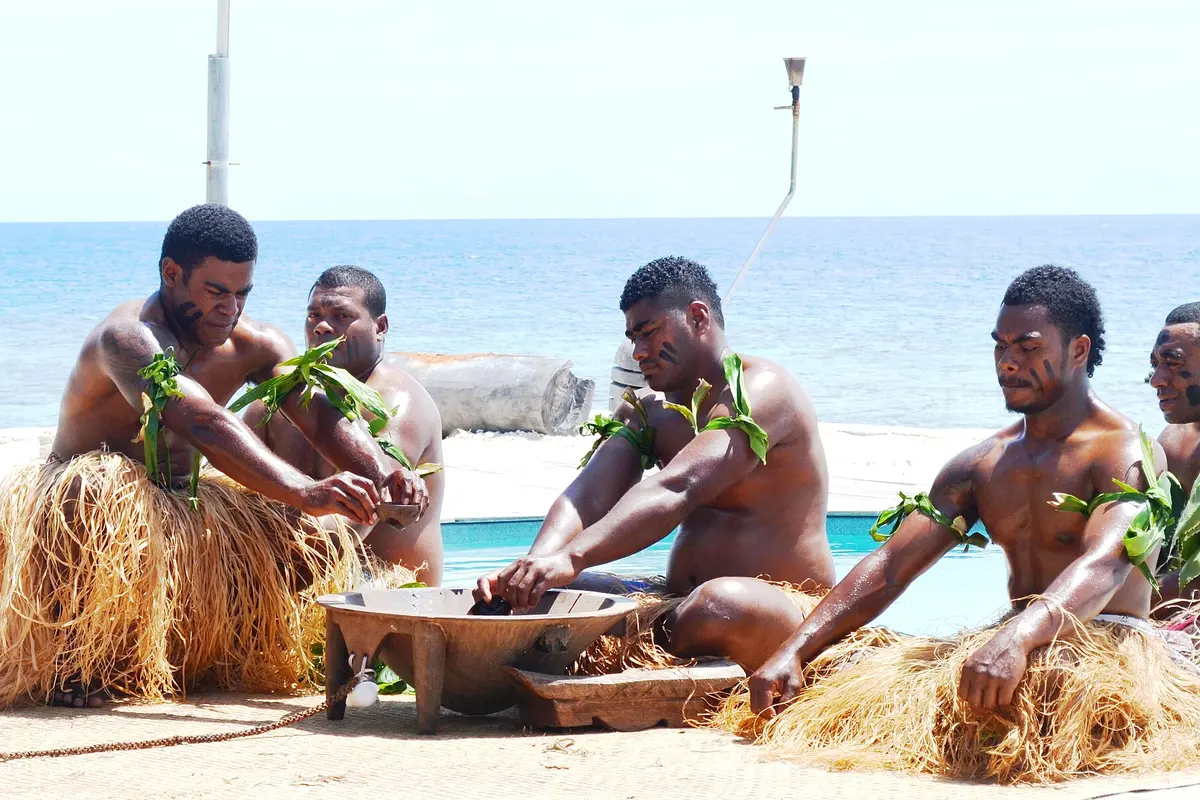
The evening opens with a sevusevu welcome and a kava tasting. In Fiji kava is called yaqona. A formal yaqona ceremony often marks important social or ceremonial occasions and usually involves presenting bundled roots as a sevusevu gift, then drinking the prepared drink, traditionally from a coconut half-shell called a bilo. Kava gives an initial numbing feeling in the mouth. The programme lists it as a tasting, not a drinking session. If you would rather skip it, ask your hosts.
Read next: Beyond the Bonfire: Fijian Cultural Etiquette for Visitors
The lovo dinner
A lovo is the Fijian earth oven: food is cooked in a pit with heated stones and covered with earth, and it can take from several hours to a full day. At the island the lovo is unearthed as part of the programme, and dinner is a buffet. The operator says meals are included and asks you to mention special dietary requirements when you book, not on the night. The operator's terms add that a lovo meal may be swapped for a barbecue if numbers are low. So if the earth oven is the point for you, ask before the day. Drinks are separate from dinner: the resort has a licensed beachside bar, and you cannot bring your own alcohol.
Firewalking, and what it is not
The programme includes a fire-walking demonstration. Walking barefoot over hot stones or embers is practised in many cultures. In Fiji it is most associated with Beqa Island, 10 kilometres south of Viti Levu, where the Sawau clan's tradition is called vilavilairevo. The operator calls what you see at Likuri a demonstration, and does not say it is the Beqa ritual or who performs it. Treat it as a short show tied to the lovo, and read the Beqa guide if the ritual itself is what interests you.
Read next: Beqa Firewalking: Fiji's Sacred Vilavilairevo Ritual
The fire and knife show
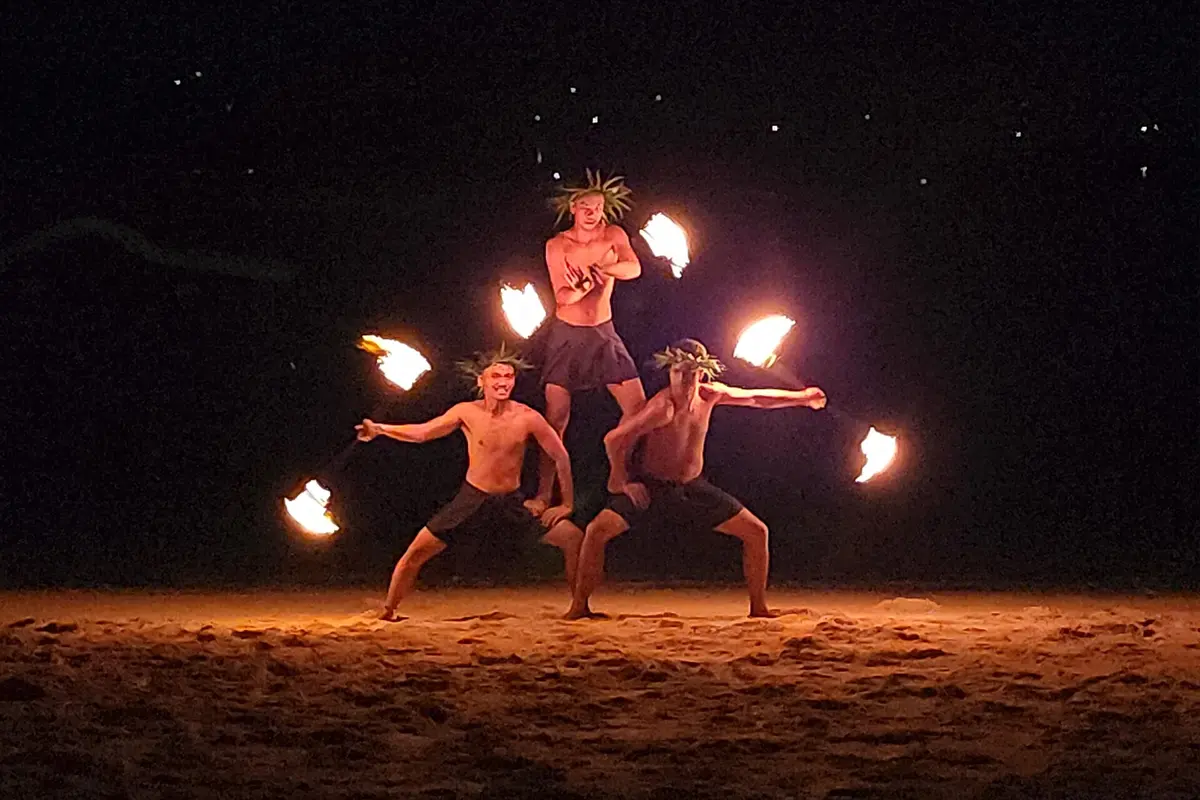
The finale is Legends of the Pacific, which features fire and knife dancing. The fire knife is a Samoan implement for ceremonial dance, descended from a battle-skill display called ailao, and many Pacific islands now include it in their shows. The operator says a Samoan chief's son from Savai'i brought fire dancing to its island in 1998. So you are watching a Samoan-style fire show in a Fijian setting, with a feast and kava that are Fijian. It helps to know which part is which when someone calls the whole night Fijian culture. The night show runs on Mondays, Wednesdays and Saturdays, and the daytime show on Tuesdays, Thursdays and Sundays.
Read next: Fire-Knife Dancing in Fiji: Where Siva Afi Comes From
Is it a meke or a luau?
Neither, strictly. Meke is the Fijian term for traditional dance, usually performed at celebrations and festivals, and traditionally by groups of men only or women only. The operator's programme does not name a meke, so do not book it expecting one. People also search for a Fiji luau. A luau is a Hawaiian feast, and fire-knife shows are often part of luau evenings in Hawaii. This evening is built around a Fijian lovo instead, with a fire show after dinner, which is the closest thing to what a luau searcher wants.
What to wear and bring
The operator tells night guests to bring insect repellent, Fijian dollars for drinks, resort wear suited to the weather, and an umbrella if it is wet. The booking adds comfortable shoes, waterproof shoes, a camera and cash. Pick shoes that can get wet, since you are travelling by boat to a beach. The operator's night-tour guidance says nothing about a dress code beyond this, so comfortable and casual is the safe choice. Keep your phone, camera and cash in something that can take a splash on the boat.
Weather, children and safety
This is an outdoor evening, and the operator may cancel or change the programme for bad weather. Any fire performance carries inherent danger, and experts recommend fire safety precautions, so follow the staff's directions on where to sit and stand. The operator describes the sunset show as suiting adults, and its family tour is the daytime Culture Day Tour. If you are bringing children, ask the operator before booking and read the age guidance on your own booking page. Bookings made outside Fiji should be reconfirmed with the operator within 24 hours of travel.
Who this isn't for
Skip this if you want a short show close to your hotel, because the island is about 45 minutes by road from Nadi, and the evening runs long. Skip it if anyone needs step-free access, because the terrain is natural. Skip it if you want a traditional meke or the Beqa firewalking ritual, because the programme does not promise either. And if you are travelling with very young children, the operator's adult-oriented sunset programme may not suit them.
Frequently asked questions
How long does the evening last?
The operator lists the sunset tour as about four hours, and the booking lists about six hours in total with coach transfers. Pick-up time depends on your hotel and is shown in your confirmation.
What should I wear to the fire show?
Resort casual suited to the weather, with shoes that can get wet. The operator tells night guests to bring insect repellent, Fijian dollars for drinks and an umbrella if it is raining.
Is the fire show a meke?
No, not by the operator's own description. It calls the finale Legends of the Pacific, featuring fire and knife dancing. Meke is a separate traditional Fijian dance form, so do not book expecting one.
Do I have to drink the kava?
No, the welcome is a tasting, and you can ask your hosts if you would rather skip it. Kava gives an initial numbing feeling in the mouth.
Is this a Fiji luau?
Not exactly. A luau is a Hawaiian feast. This evening centres on a Fijian lovo earth-oven dinner followed by a fire show, which is the closest match if a luau is what you searched for.
What happens if it rains?
The operator reserves the right to cancel or change the programme for bad weather. It advises bringing an umbrella in wet weather. Booked on GetYourGuide, you can cancel free up to 24 hours before.
Sources